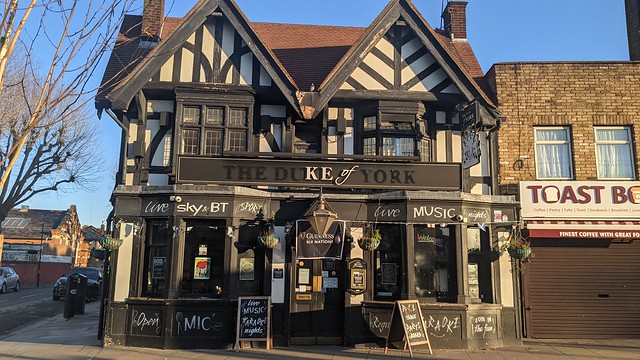
"The distance between us" is a phrase I've had in my head for a while. For me it's a way of expressing the relationship between four elements of my street photography: the individuals within the frame; myself as witness; the urban environment around us; and you, the viewer of the final photograph.We share the street, in space and in time, going about our daily business but within the mundane we have walk-on roles in one-moment dramas. Quickly forgotten, if noticed at all, but they're still there.
The Distance Between Us commemorate those moments and perhaps bring the distance between us a little closer.
20 Nov 2009
new portfolio - The Distance Between Us


12 Nov 2009
books etc
I'm an avid reader of novels set in cities. My street photography is an act of turning a passing moment into something tangible and memorable. Inversely, the words of these novels, fixed on the page, fire up images and snatches of ideas in my mind.I remember being struck by this passage from Paul Auster's City of Glass not long after I returned from living in New York City...New York was an inexhaustible space, a labyrinth of endless steps, and no matter how far he walked, no matter how well he came to know its neighbourhoods and streets, it always left him with the feeling of being lost. Lost, not only in the city, but within himself as well. Each time he took a walk, he felt as though he were leaving himself behind, and by giving himself up to the movement of the streets, by reducing himself to a seeing eye, he was able to escape the obligation to think, and this, more than anything else, brought him a measure of peace, a salutary emptiness within.
I can also pick out particular themes that I respond to. For example Jonathan Glancey's London: Bread and Circuses, Iain Sinclair's Lights Out For the Territory and Will Self's The Book of Dave each, in their own way, depict a great sweep of London's history, past and future, factual and fantastical, that changed my perception of the streets I walk today, home of ghosts of the past and the future. Here's Jonathan Glancey's insight...In a transcendental moment, I felt as if I was rising like some cockney sparrow or the spirit of William Blake and, looking down on my own city - one of the world's greatest - saw it boozing and shopping away its political conciousness as it bopped to the tune of a thousand advertising jingles. Two thousand years flashed before my eyes and I was standing in Londinium alongside a supercilious legate from Rome in a purple-edged toga. "Bread and circuses", he sneered.
Novels written in the 1920s and 30s such as Night and the City by Gerald Kersh, Twenty Thousand Streets Under the Sky by Patrick Hamilton and, of course, Mrs Dalloway by Virginia Woolf have a relevance to my present day experience of the city, of an individual's daily life in the crowd, of dealing with universal emotions and issues, while negotiating the modern world. Patrick Hamilton describes a particular event that illustrates this experience for me...Now there is an extraordinary allure in walking around, or hanging about the streets, in the vague hope of catching (and so justifying your rather bold expectations) one who has no thought of meeting you. You may, after a while, have lost all desire to see the individual in question, but at the same time you find a peculiar difficulty in behaving like a man and cutting a loss. Having gone to the trouble of trailing up and down six or seven streets, you are loth to lose your point for a ha'porth of obstinacy, and are almost convinced that the very street providence has selected for you is the eight. You therefore go up it. Then your eight will probably bring you to some short cut, or other topographically excusable ninth, and unless you are very careful you will find yourself before long calmly attacking your nineteenth.

I've just started reading the novel 253 by Geoff Ryman. It was first published online. In essence it's a series of descriptions of passengers on a London underground train and a single event that binds them together. Individuals are described in a sequence of three paragraphs, each adding complexity, literally filling out the character: outward appearance; inside information; what she is doing or thinking.In terms of location there is a direct crossover to the subway/metro images of Walker Evans and Luc Delahaye. In addition there is a more fundamental connection to the mystery of street photography, or simply the way we instinctively assess and judge those around us based on our first take of their outward appearance. A photograph of that first take lets us dwell a little longer on that person. A posed portrait offers an opportunity to find out more inside information yet we discover no such facts from contemplating a street portrait. We have to work a little harder, if we choose, to construct a story about what we see. I'd argue that effort can be as creative, worthwhile and mysterious as the taking of the original image.
Ultimately it's why I'm still driven to do what I do.
30 Oct 2009
CitySkip - network of urban life
Some of my photographs have been selected for the CitySkip website.


18 Sept 2009
"loved; life; London" published at last
The title is a line taken from the novel Mrs Dalloway written in 1925 by Virginia Woolf. I read it after seeing the film The Hours, a story of how the novel affects three generations of women, three times in a row on a flight from Tokyo so it made an impression on me in a number of ways!
In relation to my own work I connected to the novel in part because of its setting in central London, but more so through the style of writing, the personal thoughts of individuals woven into their experience of a day in the city.
The photographs of mine that arrest me most are those in which the figures passing through the frame beg me to wonder what's on their minds: the mundane, the epic, the hope, the fear.
As I work in black and white, in a style that concentrates on moments of interaction between individuals and the fabric of the city, I am also drawn to the impression that it's sometimes a challenge to precisely place these images in a particular year or even decade.
For me these moments are a bond with the lives of Londoners coming to terms with the new experience of a rapidly changing London in the 1920s, around the time Mrs Dalloway was written, an experience we continue to encounter today.

The title is taken from a passage in the book that I particularly respond to:
For having lived in Westminster - how many years now? Over twenty, - one feels even in the midst of the traffic, or waking at night, Clarissa was positive, a particular hush, or solemnity; an indescribable pause; a suspense (but that might be her heart, affected, they said, by influenza) before Big Ben strikes. There! Out it boomed. First a warning, musical; then the hour, irrevocable. The leaden circles dissolved in the air. Such fools we are, she thought, crossing Victoria Street. For Heaven only knows why one loves it so, how one sees it so, making it up, building it round one, tumbling it, creating it every moment afresh; but the veriest frumps, the most dejected of miseries sitting on doorsteps (drink their downfall) do the same; can't be dealt with, she felt positive, by Acts of Parliament for that very reason: they love life. In people's eyes, in the swing, tramp and trudge; in the bellow and the uproar; the carriages, motor cars, omnibuses, vans, sandwich men shuffling and swinging; brass bands; barrel organs; in the triumph and the jingle and the strange high singing of some aeroplane overhead was what she loved; life; London; this moment of June.
loved; life; London is my first published book.
Comments welcome!
6 Sept 2009
full frame, uncropped
I was born and raised in London in the 60s and have been taking photographs since a child. Family cat, leaves in the back yard, regular stuff.
In the mid-80s I left to live in New York City. There I found a new way of photography, or perhaps it found me. My style simply grew out of my reaction to what was happening around me and taking pictures was a means of making sense of it, of trying to connect.
The streets of Manhattan were full of open emotions, of highs and lows, of new sights and sounds and I couldn't get enough of them. The pictures I took were no longer carefully composed. They were taken as a reflexive act, part of a stream of consciousness as I careered down Broadway, across West 14th, back up 7th Avenue, immersing myself in the ebb and flow of the city, learning how the light fell at what time of day on what corner, a creeping familiarisation.
I shoot and move on, don't look back, just keep walking. I find a film processing place on West 23rd. The contact sheets invariably disappoint me. They're mute. I try harder. I want them to be as alive as the streets.
I returned to London. Walking the streets, camera in hand, it's not NYC. Life isn't lived in public in the same way. The sun doesn't shine as strong or as long. I've to work that much harder and longer to tap into the same energy from the streets. I'm also no longer the outsider, this is my home town after all, but my motivation and way of working are still relevant. I've returned to a London in the boom times and I feel like an uninvited guest at the party. Photography now channels my mixed emotions into something tangible, a positive from the negative.
I still use film, it makes no economic sense as I develop rolls and rolls to produce one worthwhile image but there is a preciousness about the 36 frames. Rewinding the exposed film back into its canister feels satisfying, a job done. Reloading a new one a kick start.
For a long time I paid no serious attention to the printing of my pictures. I regarded the fine art world of archive prints and white gloves as irrelevant. I showed my work pasted as photocopies on corrugated metal fences Then I was fortunate to meet someone who showed me that it was possible to print my pictures without anaesthetising them. Stuart Keegan's prints brought those original scenes back to life, turned the volume up. I felt like an acapella musician brought into a recording studio and given the wall of sound treatment. The resulting prints brought my work to a new audience. They were collected and exhibited and raised new questions for me.
My method of selecting images for printing up from the countless contact sheets was very much based on gut instinct, that first glimpse that induced a physical intake of breath in me. I'd never analysed them in a more intellectual way, their theme, tone, composition. I resisted it for fear of second guessing myself, giving myself the yips and losing whatever touch I had. Slowly I began to review my early work and found myself enjoying the process, of looking at them with fresh, or perhaps older, eyes. Images that I'd ignored now spoke to me.
A website followed and a book's on the way.
Meanwhile I'm still on the streets, still searching for a pulse, a beat.

Subscribe to:
Posts (Atom)