skip to main |
skip to sidebar
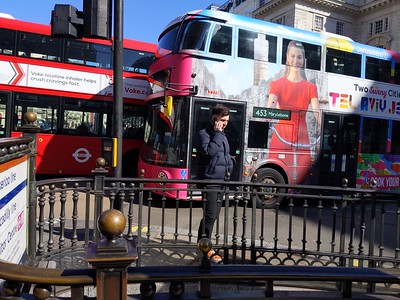
London street photography. A London street photographer. Phrases I feel proud to associate myself with. Yet - like a lot of life at the moment - I took for granted what they meant.
Let's look at London. I roamed the West End, celebrating the choreography we each practice to navigate our individual paths through the city, filling the veins of its streets with energy. My London is now as far as I can run to and from my home. Places that some would dispute even are in London! The life on those streets is now represented not by faces. Those I meet are often masked, on their way to work, a memory for me. The frontline feels an apt description as the journey and workplace will mean exposure to the risk of infection and possibly worse.
Street photography for me now is, with grim irony, just that. There are no people in my pictures. The streets themselves take centre stage. The only constant in a future still not fully comprehensible. Along the way there are signs, some explicit, others less so.
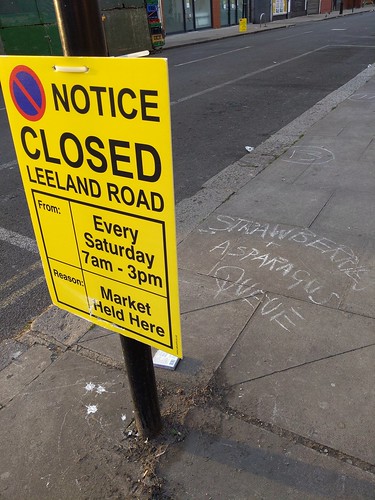
Chalking's making a comeback, another echo of an era of austerity, fear and of making do but now I see another meaning. A moment of uninhibited expression in the fresh(er) air away from the confines of the house and family. Front gardens double up as mini circular economy models or impromptu safe distance conversation stations.


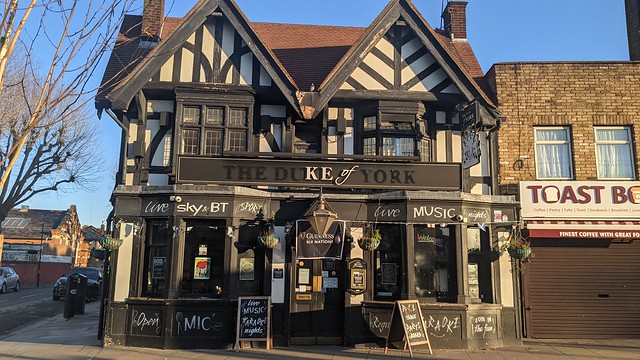
High streets and malls are also redefined, shop windows frozen in time, succumbing to a nuclear wind at the moment of the lockdown announcement. Messages of hope to customers, some corporate, some heartfelt. Shop displays decay, winter coats a dissonant reflection of our summer selves. Book pages curl, scrolling themselves into messages for bottles. Plants die and thrive recalling a prophecy from David Byrne.
Doorways and windows have been repurposed as pick up points for the outriders of the gig precariat. Combined with reversing supermarket delivery vans and emergency services vehicles traffic has a disturbing characteristic. The sound of sirens.

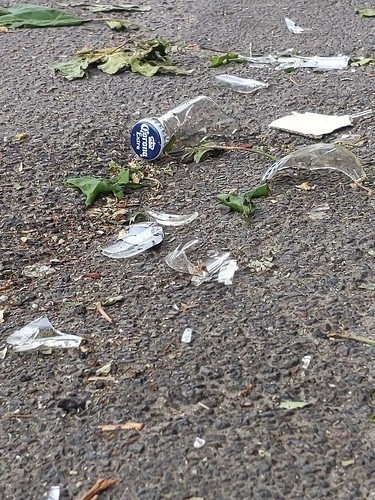
It's a world that's familiar but, as referenced a month into the UK lockdown, strange. I feel the current direction of my work is a prelude, documenting a phoney war to adopt the language of our time, before the consequences of these days take hold. As is my style I photograph the everyday, arguably the surface. The New Europe project considered how that's not necessarily opaque.
It reflects and refracts.
One fascinating consequence of the advent of social distancing is an acute appreciation of our bodies in proximity to others. It's second nature to me, and it's been a major motivation for my work, so it's really interesting to observe this go mainstream. I'd love to find out how different cultures are adapting to these circumstances. Is the motivation purely self preservation or a more altruistic? A recent article by Gia Kourlas, the New York Times dance critic poses a great question How are we using our bodies to navigate a pandemic?

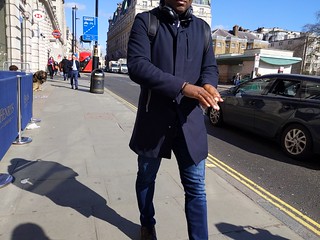
Ways of walking is for the moment no longer an independent exercise in getting from A to B. It's now reliant on mutual cooperation, overt or implicit, akin to the social nuances of a Regency society ball. Head-on passing by is sometimes facilitated with eye contact or gesture. The more agile take it upon themselves to pre-empt any confusion and step into the road. This is also a shrewd tactic when overtaking but that domain is replete with the risks of incurring a worse fate by crossing the path of a newly habilitated cyclist or jogger.

How long this behaviour lasts for, like a lot of our new ways of living at the present time, is a matter of conjecture. Situational awareness is no bad thing. Consideration of who we share the streets with, those levelling moments, are a force for change. How we share those streets again is no longer an April Fool.
Pleased to announce the arrival of a test copy of my first foray into zine territory New Europe 2015-19.
I've appended the dates since I put this together last year as it really does feel like another world. Perhaps pre-2020 will become a phrase of the future freighted with meaning. In the meantime it already has an nostalgia skin to the wonderful Café Royal books. I see so many instances of our former paradigm of privilege that it puts the themes I was exploring into profound perspective.
Here's my original thinking, way back last year...
European cities have long been shaped and identified by immigrant populations. No news there. It's how they've historically grown and prospered. This time things are different. Attitudes and assumptions are being challenged. The essence of what it is to be a citizen is being fought for, intellectually and physically.
When I think of London I don't think of monuments to the past. I think of people. People like my parents who came here for a better life. But it's not easy. London is a dream as much as a place. The streets don't always glitter with gold. But still people come from all around the world. We make lives, love, work, bring up families. Along the way we keep a connection to the home country. But something else happens. Out on the street we share the everyday. Struggles. Triumphs. Despair. We share space and time.
We belong.
Well.
The ease of travelling to European cities for the fortunate is now elevated to an aspiration for the few.
National consciousness is heightened. Borders are porous to this particular migrant. Tensions rise between city and village.
The advent of social distancing, a contender for phrase of the year, makes some of these images appear reckless. Some may say good riddance, granted.
Will we ever return to that way of walking, way of life even, with the same confidence? I'm sure we will but right now, with talk of one-way pavements, it feels a little distant.
Here's to the memory.
I'm fundamentally challenged not just by the current restrictions on personal movement but by the impact of them on my very impulse for taking photographs. The irony of the phrase street photography comes home to me. The streets are nothing without people. Without people's faces.

For succour I'm drawn to photo books. My guilty pleasures. I recently saw a picture by the photographer William Gedney posted on Twitter which lead me to a lovely collection of his work by Gilles Mora, Only The Lonely. Wilfully resisting or indeed neglecting to create any public profile for his work during his lifetime Gedney has only since his death achieved any recognition. His work has plenty of stylistic traits that interest me but I was drawn to his working practice, what Mora calls his "commitment to his art...born solely of a internal necessity"'

Myrtle Avenue, May 5, 1969, 4:45 pm, William Gedney
His work is part of but also separate from the American 20th century documentary tradition. The words immersive and complicity are used to describe his technique and it's fascinating to see how he transposes that to his street work. One of Gedney's significant project was the documentation of life on Myrtle Avenue as he looked from his window in Brooklyn. One image that caught me eye is the only one in his archive titled with such specificity. It place not just himself but me as a viewer in that moment in time. I've always eschewed titles of any description yet this made me think again. It made me think of Chris Dorley-Brown's use of it in The Corners to root his images in an alternate reality. For me knowing the time the picture was taken doesn't define it but adds another layer of story telling, of possibility, of ambiguity.
I'm intrigued. Why May 5? 4:45 in the afternoon? What happened on that day? At that time? I thought of the turmoil of that decade in America, powerfully portrayed by Paul Fusco's Robert F. Kennedy’s Funeral Train. I imagined Gedney listening to the radio and feeling impelled to record and reflect the moment. It'd be fascinating to see if anything is revealed in his writings. I don't think it's what I found.
I recognise this relationship of the ordinary to the extraordinary was my motivation for my New Europe project. It's also poignant that any photographs taken in 2020 will need no such checking.
Everyone knows what started then.