Thanks for all your support.
Read all posts, old and new here
https://www.seanmcdonnell.com/street-photography-blog
Thanks for all your support.
Read all posts, old and new here
https://www.seanmcdonnell.com/street-photography-blog
It was lovely to have the opportunity to talk about my work in front of a live audience as part of London Independent Photography's Members Day. It's been a few years!
This was the first time the event was held in a local satellite group so it seemed fitting to talk about my Living Lockdown project from the streets of Ealing. I wanted to show the impact the pandemic had brought to my work so it was nice to resurrect some of my black and white photographs from London's West End too.
I brought some of Stuart Keegan's prints along too and it reminded me that there are many I never had scanned for the website. It would be great to find a way to do them justice!
The event was also the launch of the latest fLIP magazine where I've written a review of The Book of Veles by Jonas Bendiksen. Its origins were in a talk I gave to my local group earlier this year and I enjoyed spending more time on reflecting on its cosequences for documentary photography.
As Bendiksen reflects, for him documentary photography is photography which has the intention of being part of the conversation about us, us meaning us humans, and the situations we find ourselves in. The questions we're facing. The solutions that we're aspiring to. Documentary photography is photography that relates directly to those somehow. However you make it.
It's a candid assessment and, in the light of his experience, a view worth listening to. Is this a natural evolution or heresy? Will the Book of Veles be seen as prophecy or prank?
If we care about this form of photography, I suggest we keep paying attention.
News of a sunny spell would have excited me back in the day. It was the essential ingredient and stimulation for my photography.Now it's a cause for anxiety.
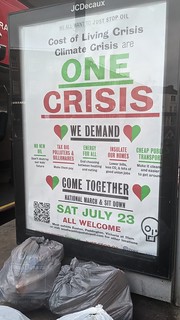
There's a terrible irony that while this is happening the bigger fear is the cost of living crisis or, more to the point, the cost of energy crisis this winter. The short term solutions are diverting attention from addressing the climate crisis itself.
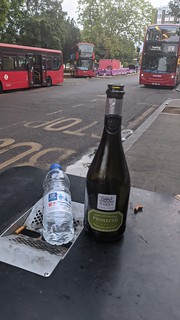
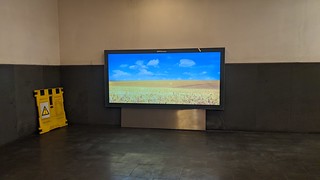
These pictures, taken back to back, seem to capture the moment.
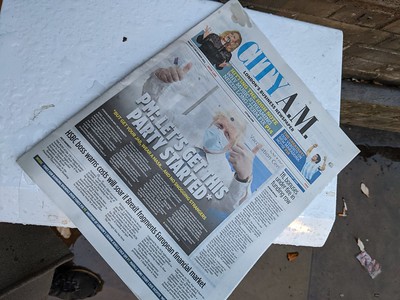
Precipitously our attention has been immediately taken by news from eastern Europe. It adds to a sense of ongoing crisis, another cause to take up arms for. Ukrainian flags now appear in windows. The palette of the rainbows of lockdown reduced to blue and yellow. We know the routine. Fundraising for the frontline. However it isn't a simple binary exercise. The home front still needs attention and we just don't have the bandwidth of compassion for it. People's lives are still in crisis.
I'm still driven to take photographs. It's a lifetime habit but I find this particular work rewarding in other ways. There's a first page of history buzz. This is a development of the theme for my pre-pandemic project, New Europe 2015-19, thinking about the wider political contexts that my images exist within. It's also still simply a way to engage with the world around. By definition it's superficial, on the surface, but that's the point. The street is a leveller, a common experience, and all the more valuable for that.
It felt significant to be in the Photographers Gallery visiting this year's Deutsche Borse show. I last attended two long years ago, in the early weeks of the pandemic. It some ways everything was back to what it was, but I sense there is still an awareness of social space. Not quite the choerography of lockdown, more a heightened politeness.
It was a visit that prompted memories in another way too. I was particular interested to see Whatever You Say, Say Nothing by Gilles Peres.
Having spent my childhood summer holidays in Ireland, split between the north and west of the country, the images had a resonance as both reflections of experience but also representations of a reality that was not that long ago.
The arrangement of the room, the use of the walls of the space and one across the centre, accentuated the significance of that form in the narrative of The Troubles, serving as a division, a hiding place, a canvas. The images were presented as excerpts from the structure of the book.of 22 fictional days. The text is woven into the display to create a richer, and more disturbing, experience.

I also appreciated the production of the images, in an almost bllboard style. Another acknowledgement of the street roots of the work. Certainly not the preciousness of a high end gallery and another remider of an early show of my work.
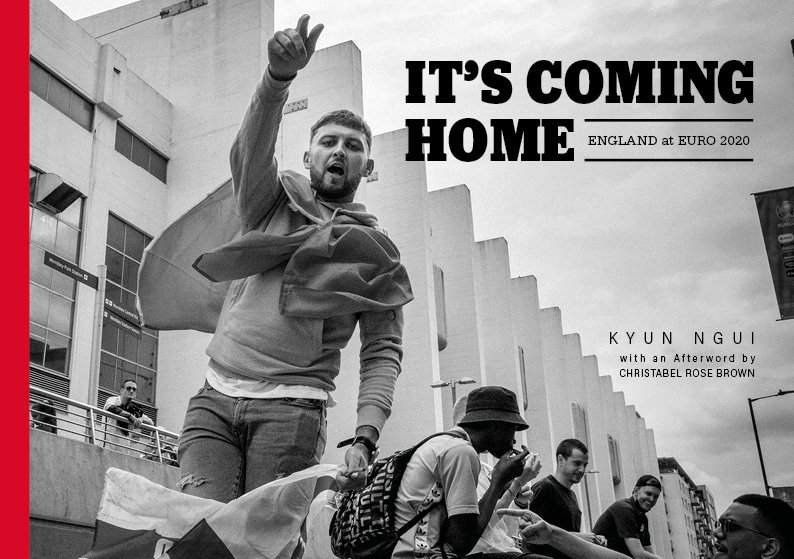
Honoured to have had the opportunity to review Kyun Ngui's zine It's Coming Home for the London Independent Photography group. It's overdue some publicity.
I remember how impressed I was when Kyun originally introduced this to the Ealing group as a fully formed project soon after the tournament ended.
The images fizz with atmosphere and...well, you'll have to buy fLIP to read the rest!
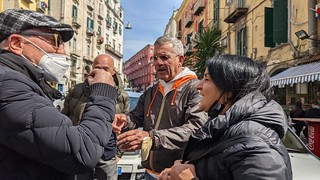
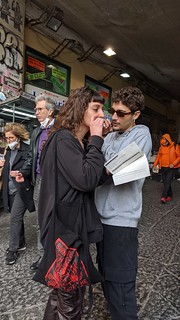
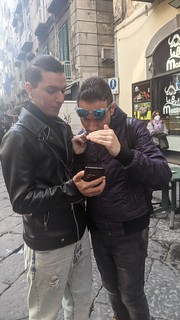
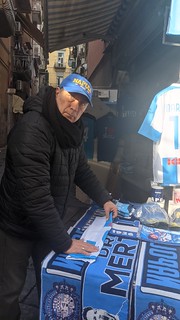
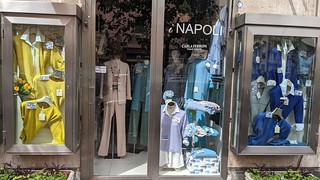
After so long at home, a short break away in Naples was a throwback to a pre-pandemic time for me. Looking at the photographs now, I can see the style of those days but my recent project has definitely left its mark too.
Significantly signs of the pandemic - apart from conscientious mask wearing - are few but responses to the latest crisis in Europe are evident.
So where's the black and white ones on film? Well it's another sign of my times. I did bring my camera but found my mobile - as I had a few years ago after a break - has become my new extension. The transplant is complete, almost.
The first days of spring are bringing darker days, not lighter. The stress and struggle of the last two years have been put in context in an unimaginable way.
It brings me back abruptly to my New Europe project. That project was borne of travelling to cities around Europe, freely. Of acknowledging London as a city of refugee and refugees.
That also seems a distant memory right now.
It's been a while since my last nocturnal walk around the city. What was a first though, was joining a group of other photographers on the adventure. I've always felt a little superior to the pack approach, playing on the lone wolf stereotype, but this taught me not to be so precious. It was really interesting to look through other people's eyes on the same scenes when we shared our work with the wider LIP group.
In addition the walk was well structured by Dan Dodman to reference points of historical note en route, so it brought together two of my passions. The only downside to the evening was my failed attempt to pirouette some street furniture in the dark. Ouch.
My slalom metaphor suddenly seemed very apt.
As restrictions in London ease it's wonderful to have the opportunity to see some photography in real life. Two shows caught my eye to mark my return. They were, guess what, a throwback to black and white work from the fifties and sixties, an era that first stimulated my passion for photography.
The location of the shows were in many ways the antithesis of their roots. Swish, exclusive art dealers in London's Mayfair district are a long way from Roy DeCarava's roots in Harlem and Mary Ellen Mark's work in Seattle.
I remember seeing Mary Ellen Mark's photography as part of a wonderful show in 2018 at the Barbican, Another Kind of Life. There the context and stories of the participants were very much part of the experience. The way her work was displayed in Alike, My Friends, was strangely disconcerting. Stripped of any title alongside the image in such a body of humanist work felt wrong. Commoditised. Oh yes the titles could be found. In the price list.
Walking past the Royal Academy and along New Bond Street my emotions were mixed. There was certainly an energy and buzz. Maybe it was the aftertaste. The haves and the have-nots have always been woven to form the fabric of London. However the latest iteration feel more monochrome.
So I was concerned entering the next show. I've held Roy DeCarava's work close to my heart for a long time. I remember buying a monograph in the old Photographers' Gallery bookshop on Great Newport Street when that was really the only place I knew to educate myself.
It was a relief to enter the space at David Zwirner and find the work presented so well. It's still a "selling" show but classy. It helped that the late afternoon winter sun gave an ambience and warmth that literally gave life to the work.
Faith restored.
Well just adding this image to the page gave me a thrill. It's been a while....
Back last summer I, ironically of course, posted an image of an exposed roll of film, the result of a wander around London's West End for the first time in a long time. Well plus ça change. True to form it's taken my usual gestation period for the images to see the light of day again.
The style hasn't materially changed either. I've written at length about that and also how I'm at a point of reflection now too, but it was good to just reconnect with those familiar streets. Nothing's fixed in time of course.
They shift beneath my feet, now more than ever.
I first became aware of Jonas Bendiksen in a photography show at the PM Gallery when I remember being struck by an image from his Satellites project. This was a classic piece of Magnum photojournalism: humanist stories, documented against a backdrop of political and social turmoil. It was fascinating to discover that he had used the reputation of his persona and of Magnum to create a fictional documentary project, The Book of Veles, raising questions about authenticity, trust and the photography establishment.
It was a topic of interest for a number of us in my local photography group so I put together a short talk. In retrospect it's a companion to one I gave over a year ago on ethics.
There are lots of sources that describe the story but I found Ben Smith's interview very interesting and well worth a listen.
I've been fascinated by the creative output the pandemic has produced, in particular - and unsurprisingly - through photography zines, books and exhibitions. I've referenced examples already but wanted to draw some themes from the ones I've picked up along the way.
It's also an opportunity to reflect on my own response, of course. We're at a significant point now in England. The national unity of the first wave of the pandemic feels a long time ago. We're approaching a new year better protected but with less confidence of getting back to normal than last December. There's a creeping realisation that how we collectively learn to live with the pandemic comes next.
The images and texts in these zines and books are already historic. However for me it's as much about the motivation behind creating them as the actual content itself. They represent ways of using the act of making images and of distributing them to help deal with the situations thrust upon people, in a highly engaged way. Perhaps it's the act of turning documentary practices onto individuals and communities more cross-sectional than stereotyped. The consequences are not only a record of our times but place image making, of and by ourselves, at the centre of that record.
The early days of lockdown initiated a number of "doorstep" projects and one I really like is Levy Lockdown Portraits by Ciara Leeming that she's now developed into a full participatory project with her local community sharing experiences through stories and diairies as well as photography.
Using photographs to stimulate personal narratives is also a feature of Birmingham Lockdown Stories by Jaskirt Boora. Here we move from the doorstep into locations of peoples' choice, which is a wonderful way of creating trust and representations of worth.
Another zine with the mission to "move beyond the doorstep" was published this year. Still Life by WorkHorse Collective presents some innovative interprations of lockdown life with a mission to give a platform to people otherwise underpresented.
Taking control of representation is also a feature of My Camera My Therapy by Natalie Ball. Giving equal weight to the testimonials of photographers opposite their images in the zine is symbolic of their relationship with photography and the role it plays in their lives in lockdown.
Paul Treacy produced another of his wonderful handmade books and it was great to see it picked up by the BBC. Pandemic Constitutional is a soulmate of Natalie Ball's work as a portrait of someone coming to terms with life with COVID. I can certainly relate to the structure of the work, found pictures taken on walks around a local neighbourhood, but Paul's phrase 'sustaining creativity' is particularly striking.
Two other personal collections of local life in the early months of the pandemic are Village Lockdown by Robert Law and Lockdown Fakenham by Keith Osborn. It's fascinating to cross-reference the images that could be interchangeable in places.
At this point I have to mention two collections of London lockdown photography. The LIP Chronicles from the London Independent Photography group I'm a member of. Produced on newsprint, images from group members are arranged across a weekly timeline from the announcement of the what became the first lockdown in England, reflecting a range of creative responses. Even looking back at it now sparks memories.
I must say the London in Lockdown collection, published by Hoxton Mini Press and introduced by Jilke Goldbach presents a tremendous range of work. Chris Dorley-Brown's early morning cityscapes I was familiar with and Jemima Yong's Field too. However for me the variety of images in Spencer Murphy's Our Bullet Lives Blossom As They Race Towards The Wall conveys the strangeness of those days perfectly.
Continuing the theme of compilation, perhaps what will become the official record of events Hold Still published by the National Portrait Gallery is a survey of the nation taken from an open submission of portraits by people across the country. Raising money for Mind, it also generated a digital and an outdoor exhibition of the work across the country at the end of 2020. Looking at it now a year on it perhaps best captures what was characterised as the blitz spirit of that period.
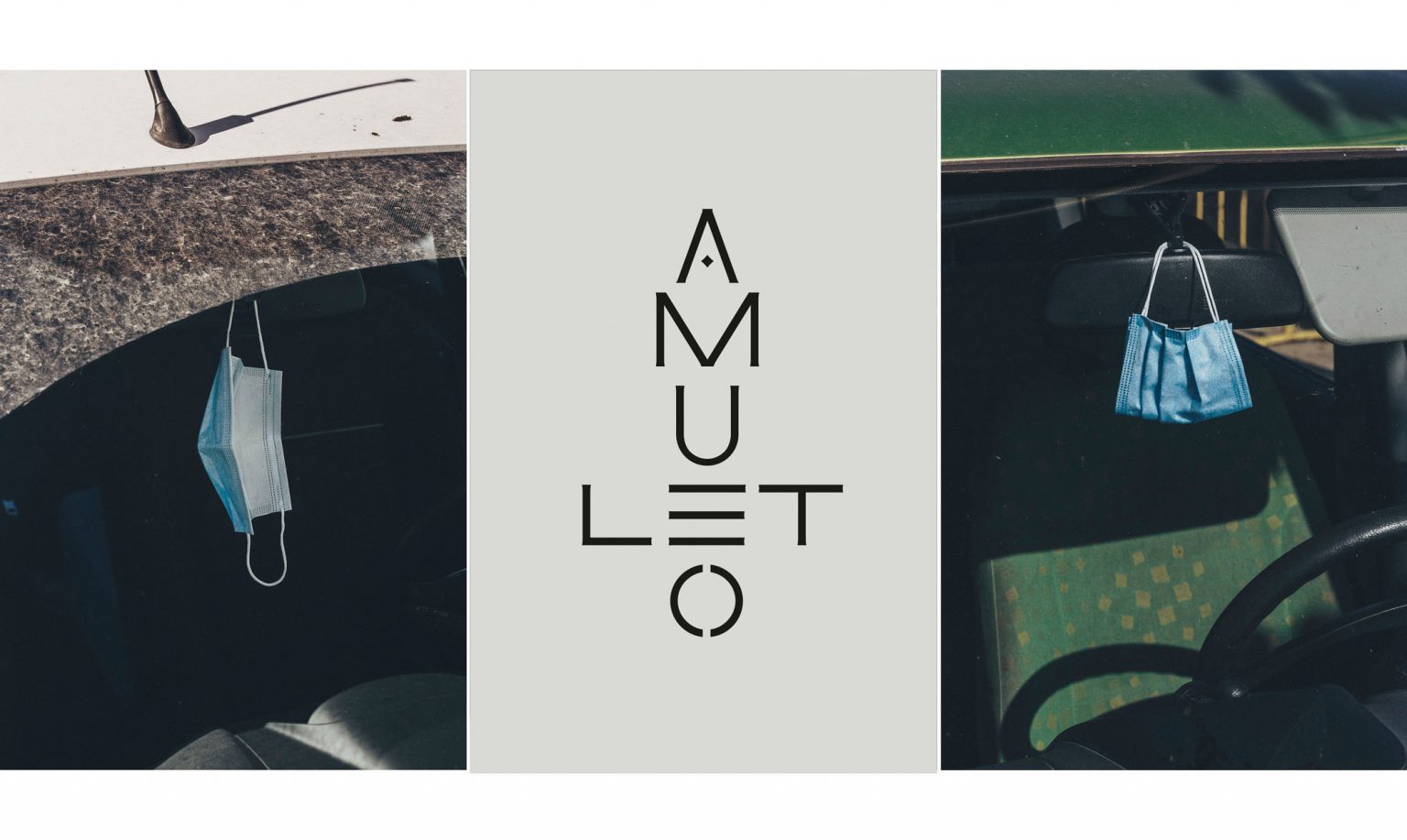
A 180 degree view of that are posed by three very personal works. A project I greatly admire and wrote about last year is good to reference here too. Amuleto by Francheska Melendez and Ben Roberts is a powerful synthesis of the pandemic in Spain and the Black Lives Matter movement. Eighteen months year on, the value of documenting that summer is so valuable as memories fade.
Europe is also the setting of John Perivolaris's Pandemicon 2020-2021, an odyssey from Scotland to Italy and Greece, made all the more poignant by its dedication to the death of his mother from COVID.
I've been intrigued by the idea of a box of prints and as an alternative to zines and books it was so good to see that approcah taken by Tristan Poyer and his work Masked: A Portrait of Amazon. His rationale is best read directly. I couldn't do it justice by paraphrasing it. For me it's the best testimony of this period I've seen.
For completeness I'm going to add two of the first publications I found at the start of the pandemic and mentioned last year, Insiders and Limbo. Now in retrospect it's fascinating to see the work produced so early in the pandemic and that initial period of extreme isolation when many creative people found ways of expressing and supporting eachother.
I'd also like to mention a non-photographic work for the stimulation of its writing. When This Is All Over by The London Society is a range of essays about the possibilities and opportunities of post-pandemic life in London. It actually does have a some fine images and illustrations so I think I can sneak it in to this selection ;)
And finally - for now - I'd like to include a work that's just been crowdfunded so I don't have it just yet but with the title Photography through the Pandemic it's hard to resist.
I do sometimes feel I should just "move on" from the fixation with the creative consequences of the pandemic. When I see work like this it gives me faith to stay the course.
Reflecting on a second year of COVID it would be strange not to include the five storeys high exhibition. However the real highlights for me have been the impact on local community groups. This outreach work was part of our pitch for fundraising and for me in particular became a way to reconcile my initial unease with the project. Spending time with a group from Southall staring up at the front of Ealing police station felt like a way of squaring the circle.
The resulting workshop back in their space produced some poignant reflections on the impact of the pandemic on their lives. I brought A4 versions of the photographs from the show to pick from and A4 paper so they could draw and write their responses. It was a privilege to hear the emotions and memories evoked by the photographs. Afterwards, sharing their creativity with the photographers whose work was selected alongside the accompanying pieces, gave us all a moment to reflect for ourselves.
It also gave me momentum to develop a pop-up version of the exhibition to create a space in a community centre in another part of Ealing to share their experiences of the pandemic.
I spent time with people in a couple of drop-in sessions just listening and then talking about the idea of the show and encouraging them to bring their own photographs from the last eighteen months. The result was a unique display of photographs made by the Gurnell Grove community during the pansemic on screen, presented alongside a mini version of Ealing Unlocked on foam board, ranged around the community centre.
Collaborating in this way, to recognise the value and give a platform for people's images, was another fascinating way to leverage the original project to create something new and significant.
Can't wait to see what we can do next.
I'm writing this having just published my third book of photographs from the streets of Ealing over the last eighteen months. I'm anticipating - hoping? - it will be the last, having reached the end of the official restrictions, in England at least, back in July. However I think there's little belief that this is the end of the impact on the mental and physical health of a large part of the population and will be felt by generations to come.
My motivation for documenting the symbols of these times as they unfolded was to find a way for me to comprehend the changes in our ways of living, working, even being. In a world where so much influence is attributed to social media, I've been struck by the intimacy of handwritten notes and signs. Shops have become time machines, fast-forwarding us into the future. Hairdressers going out of business, re-opening as COVID testing centres. Want to buy some shoes? How about an electric bike instead? Simultaneously we've been pulled back in time. Posters for cinema and theatre openings replaced by public information instructions. Take a Jab for Britain. Countered by Cold War cartoons on lamp posts, representing the resistance. The mask has become a touchpaper of division we'll live with for a long time.
It's been positive to turn these sideways observations into something of tangible benefit for people directly impacted by the pandemic, through making a contribution to Ealing Foodbank from the book sales. It's now set me on a path of working with other members of Ealing LIP to find ways to use photography to enable local community groups to express their own feelings about their experiences..
I've also been taken by my pivot from a lifetime of pursuing a passion for black and white photography on film of people on the streets of London's West End and other cities around the world, to a daily routine of using my mobile phone to record what I literally stumbled across on my morning runs around my local neighbourhood. So where does that leave me now, when I have the freedom to return to those streets? It's important to recognise the ideas and movements that have come to the fore in these febrile times. Rights of representation and the power of privilege are now impossible to ignore in everyday life and certainly in the practice of street photography. It's made me re-think carefully about my own ways of working.
On that note the range and brilliance of creative response to these time has been inspirational. I confess to having found it hard to resist buying books and zines, often for good causes, as well as attending fascinating virtual exhibitions and talks about peoples' ways of dealing with lockdown and loss. I'm proud to have been part of Ealing LIP's own contribution through the Ealing Unlocked exhibition. Platforms have been taken by marginalised voices and opportunities seized to innovate and share ideas with new audiences. I hope to see that the channels of production - as well as the work - will not be forgotten too.
The pandemic has been a portent of the pace and impact of disruption that will become more common as we face the realities of social and climate disruption. Photography's response will inevitably draw upon its history of documenting, but I feel its tradition of activism will become more vital and those shifts in the balances of power can be amongst the positive changes we can take through the other side of lockdown.
This year's group show of my local photography group is literally a step up from my last one. Taking over the front of a five storey police station sounds a pretty subversive exercise but this is being done with their cooperation and the support of a great crowdfunding campaign.
I confess to ambivalent feelings about the project. Initially I was intrigued if this would ever get off the ground (OK, the puns stop here) so getting involved in the fundraising has been a real education. It's understandably seen as a community relations exercise so for me the project has become an opportunity to engage local community groups in their experiences of lockdown and unlock (last one) some of their thoughts using the photographs as a starting point. Photography has become for me more and more a means to an end, the images themselves just one point in the process.
I'm really looking forward to working with people on these and continuing to try and make some sense of our times using photographs. No pressure then.
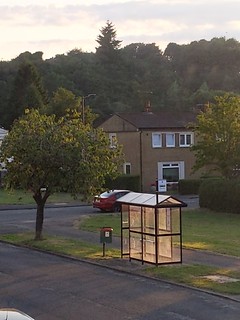
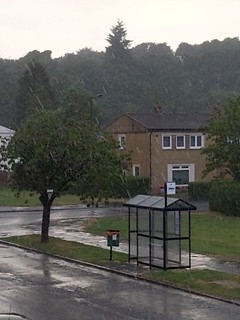
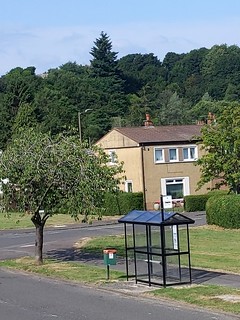
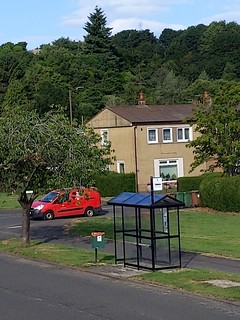
A break in Scotland presented me with a opportunity to take some different kind of photographs. no it's not the landscape of glens and waterfalls. You can take the boy of the street but the streets are still...well you get the picture. Here's a series of snaps from a bedroom window. There's a lockdowny (word?) feel but it was the composition of the view and a sense of time passing that struck me.
In the back of my mind I'm sure was the wonderful TTP project by Hayahisa Tomiyasu.