Showing posts with label NYC. Show all posts

14 May 2020

life skills

One fascinating consequence of the advent of social distancing is an acute appreciation of our bodies in proximity to others. It's second nature to me, and it's been a major motivation for my work, so it's really interesting to observe this go mainstream. I'd love to find out how different cultures are adapting to these circumstances. Is the motivation purely self preservation or a more altruistic? A recent article by Gia Kourlas, the New York Times dance critic poses a great question How are we using our bodies to navigate a pandemic? 
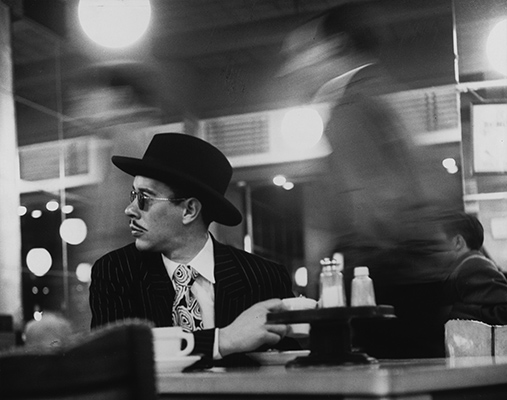
Two figures in London street

Ways of walking is for the moment no longer an independent exercise in getting from A to B. It's now reliant on mutual cooperation, overt or implicit, akin to the social nuances of a Regency society ball. Head-on passing by is sometimes facilitated with eye contact or gesture. The more agile take it upon themselves to pre-empt any confusion and step into the road. This is also a shrewd tactic when overtaking but that domain is replete with the risks of incurring a worse fate by crossing the path of a newly habilitated cyclist or jogger. 
link to my Museum of London street photography show selection
How long this behaviour lasts for, like a lot of our new ways of living at the present time, is a matter of conjecture. Situational awareness is no bad thing. Consideration of who we share the streets with, those levelling moments, are a force for change. How we share those streets again is no longer an April Fool.

6 Apr 2020

only the lonely

I'm fundamentally challenged not just by the current restrictions on personal movement but by the impact of them on my very impulse for taking photographs. The irony of the phrase street photography comes home to me. The streets are nothing without people. Without people's faces.
Sadiq Kahn, London Mayor on TV
For succour I'm drawn to photo books. My guilty pleasuresI recently saw a picture by the photographer William Gedney posted on Twitter which lead me to a lovely collection of his work by Gilles Mora, Only The Lonely. Wilfully resisting or indeed neglecting to create any public profile for his work during his lifetime Gedney has only since his death achieved any recognition. His work has plenty of stylistic traits that interest me but I was drawn to his working practice, what Mora calls his "commitment to his art...born solely of a internal necessity"'
Myrtle Avenue, May 5, 1969, 4:45 pm by William Gedney
 Myrtle Avenue, May 5, 1969, 4:45 pm, William Gedney
His work is part of but also separate from the American 20th century documentary tradition. The words immersive and complicity are used to describe his technique and it's fascinating to see how he transposes that to his street work. One of Gedney's significant project was the documentation of life on Myrtle Avenue as he looked from his window in Brooklyn. One image that caught me eye is the only one in his archive titled with such specificity. It place not just himself but me as a viewer in that moment in time. I've always eschewed titles of any description yet this made me think again. It made me think of Chris Dorley-Brown's use of it in The Corners to root his images in an alternate reality. For me knowing the time the picture was taken doesn't define it but adds another layer of story telling, of possibility, of ambiguity. 
I'm intrigued. Why May 5? 4:45 in the afternoon? What happened on that day? At that time? I thought of the turmoil of that decade in America, powerfully portrayed by Paul Fusco's Robert F. Kennedy’s Funeral Train. I imagined Gedney listening to the radio and feeling impelled to record and reflect the moment. It'd be fascinating to see if anything is revealed in his writings. I don't think it's what I found.
I recognise this relationship of the ordinary to the extraordinary was my motivation for my New Europe project. It's also poignant that any photographs taken in 2020 will need no such checking. 
Everyone knows what started then.

13 Oct 2016

an infinite mix

I love to discover other creative forms of expressing city life.

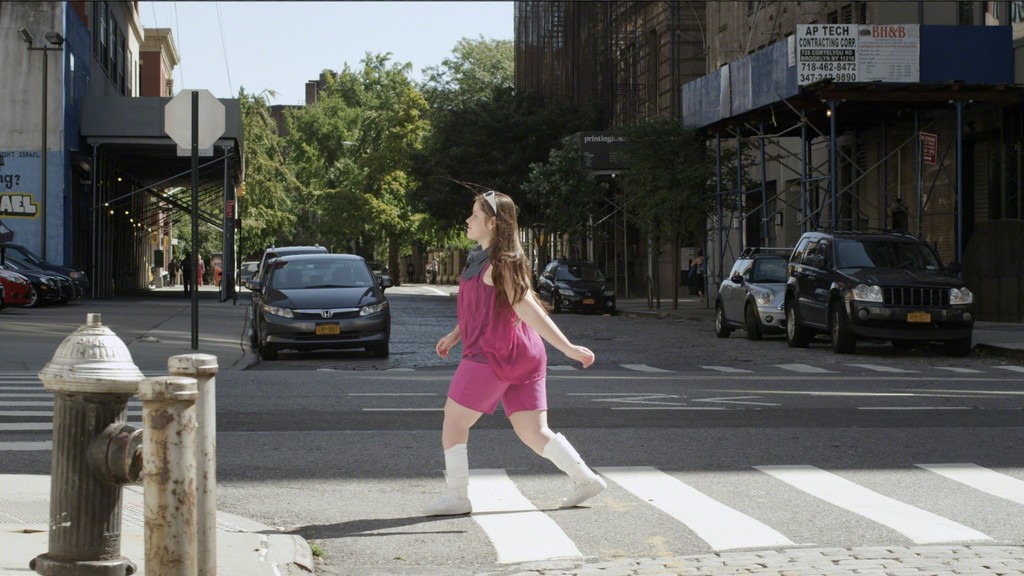
Currently showing at a former office block on the Strand is Martin Creed's short film Work No. 1701. Describing it as a sequence of individuals crossing a street in New York with a garage punk soundtrack doesn't do it justice. The individuals all have idiosyncratic behaviours, food and drink from a street photography point of view, evoking Bruce Gilden.  
However these aren't snatched shots in a crowd but composed portraits in a relatively isolated back street. In a way nonjudgmental, as much as any posed image can be, the subjects are given time to be themselves, the viewer to contemplate.
link to Work No. 1701 
It made me consider my image making process. It also lets the viewer make up their own interpretation about the image - good - but gives no control to the subject - bad?. 
This form of candidness is a hallmark of my form of photography. The artist/subject relationship is well debated across the history of art, let alone photography, but perhaps street is one area where it's unequivocal. Perhaps candour photography is a good description. Fancy running with that?

Anyway the film's available online so I recommend finding a big screen and turning up the volume.  

Coincidentally it reminded me of Shadow Walker by Mark Wallinger, a film I saw earlier this year. This takes the form of a self portrait made by the artist recording his shadow walking along Shaftesbury Avenue. Interesting how such work can be described - adequately but so poorly - in a single sentence.  


It's similarly beguiling.  

in this film provided by the point of view, from and towards a place one seldom if ever takes, and the related choreography, performed subconsciously by any individual on the street navigating their way without incident. There's no explicit explanation for this piece i.e. What's the purpose of the walk, what symbolism should we look for.  I think it's richer for it.  

Very street.

21 Jul 2016

still looking at me

Another return after a break. This one almost 30 years. Back to where it all began. 
I certainly had mixed feelings on my return to New York. My fears of a sanitised city were unfounded though. Manhattan, its people and its streets, I'm glad to report are still alive and kicking against the pricks. I found Times Square and my old rat runs as stimulating as the first time.
Here are some rough cuts of some ideas in progress. 
Do not adjust your monitor. Yes they are colour and digital. 
Have mercy.
link to street photograph
And here's a quotation I heard on the radio one morning
We shall not cease from exploration, and the end of all our exploring will be to arrive where we started and know the place for the first time.  TS Eliot
Feel there's another book in the making here...


21 Aug 2012

for the grace of god

Memories of New York in the 80s recently hit me watching a film about Bill Cunningham, a chronicler of Manhattan street and society fashion. His way of working can be characterised by a comment he makes to someone concerned he's missed dinner at a charity event he's photographing. "I eat with my eyes" he informs her. And so he does, not just eating but living and breathing it too, out on the street with a degree of fanaticism and "in your faceness" that reminded me of Bruce Gilden but, significantly, without the aggression or latent hostility. Bill Cunningham is more a butterfly catcher than a hit man, pinning the exotic, the ephemeral to a page in the New York Times for dissection and classification.
His technique of riding a bike, eyes more on the sidewalk than in front of him, affords him the ability to anticipate opportunities that a foot-bound mortal would miss. I'd love to know how many of his 27, and counting, stolen bikes were sacrificed for the prize of a picture of a pair of Manolo Blahniks.

The overwhelming emotion I felt was of the capricious nature of street photography. Its promise of the perfect picture, always just around the corner; the nobility of the endeavour, chasing rainbows not the Dollar; its intrinsically subversive behaviour, breaking conventions of a polite society. Falling into temptation is to embrace an alternate state of body and mind. Intoxicating. Liberating. Addictive.
I confess to have fallen from grace several times. Certainly not to the heights of Bill Cunningham but the streets, of New York in particular, called me and I was a willing follower.

26 Jul 2012

give my regards to broadway

I'm really pleased to see the Museum of London's survey of London street photography has now transferred to the Museum of New York City. For me it's the return leg of a journey that started back in the 80s when I began to take pictures in Manhattan in a style that I only later understood was street photography.
Since then my theatre of operations has been pretty much London, with the occasional tour to continental Europe and beyond, but the the city has reverted to what it was before I lived there a long time ago...a constant influence through music, film and literature but also not so much a physical place, dare I say it, more a New York state of mind.
link to my Museum of London street photography show selection

So my images in the show feel like a homage in two ways. One to the birthplace of a style of photography that portrays the individual in a city in a struggling to assert their identity. The other a postcard, "Wish I was there"!

17 Mar 2011

Are you looking at me?

Thought I'd just publish my recent piece in fLIP, London Independent Photography's magazine. 
As I've found with this blog, reflecting on why I do what I do is a rewarding exercise. The standby excuse of any artist, the "I just do it because I have to" position, is perfectly acceptable but, as I've found, a missed opportunity to question and justify my own indulgent behaviour! 
Anyway on with the show...
Standing in the shadow of Centre Point I'm facing a dilemma. It's 4.30 on a still July afternoon. Attempt one more pass westbound along Oxford Street into the sun, my friend and adversary. Take the tube to Marble Arch. Risk missing a scene. Restore some energy for the eastbound assault at 5. Head's throbbing, throat's dry, hands sweaty. Last roll of film presses insistently against my heart. Remember. Left breast pocket for fresh, right for spent. Left right, left right. Suddenly I'm off. I exit my cool refuge and immediately sense an opportunity. Pulse slows. I'm physically here. My mind's out-of-body. The curtain on the choreography of the street is about to rise. Cue Sean. 
I appreciate this may all be a little melodramatic; the portrayal of the photographer as outsider, a single white male with a starring role in his own remake of Taxi Driver, perhaps with better hair. Nevertheless my approach to photographing on the streets of London is characterised by both a physical and mental immersion in the act of taking a picture. 
It all began over twenty years ago with my baptism to the streets of Manhattan.
"Is the bus free? Is the bus free?"
"Kid, the only thing free in New York is the air." 
A spiritual home to a kid who idolised 70s TV cop shows and 80s new wave bands, New York City became my real home for a couple of years. More by accident than design, my move was as much about the chance to re-invent myself in the grand tradition of 'making it there' just like Frank Sinatra said. It wasn't easy. As my airport bus driver friend would agree, New York is a helluva town. 
Taking photographs became a way of making sense of this Babel. The density of midtown streets, the impulsion to keep moving, "NO LOITERING" signs, lead me to a style of photography that kept me inside the strongest currents of this stream of consciousness. Pre-set aperture, shutter speed, focus. Camera rarely held to my eye, more often away from my body, a two-way mirror that both reflects and absorbs. Not that this technique was without drawbacks. A couple of months after my arrival in the height of summer my camera had enough and expired on the corner of West 34th and 8th. After presenting it to a repair shop for estimate I was admonished on my return and told not to use it on the beach without sufficient care. In fact the salty residue that had seeped into my camera was the sweat from my hand. 
Although my technique has essentially changed little since then, the greatest difference has been in my perspective. In New York I rushed to the film processing store every week, clutching my half dozen rolls of Tri-X, eager to see what sliver of the street I'd managed to capture. Invariably I returned disappointed. The images never quite living up to my expectations. Mute, monochrome, motionless, I felt I'd anaesthetised the very things that inspired me. Yet I persevered, always looking for that one, golden shot. 
Back in London my frustrations mounted. I felt I'd stacked the odds even higher. At least in New York a constant diet of sunshine fed my fast shutter speed, big depth-of-field habit. A neat grid of streets meant I co-ordinated my wanderings to maximise the light: shadow ratio. An exuberant street culture guaranteed a flow of individuals of all strokes, loud and proud. As I attempted to mine the same vein in my home town I began to wonder what I was doing. My persona as outsider had been legitimate in New York. That didn't seem to ring true any more. 
Then I did something I'd never done before. I began to really look at my pictures. Plunging into my contact sheets, old and new, I found images that had lain dormant for ten years or more. It struck me it wasn't about the golden shot any more. It was about recognising the possibility of a picture. It was the act of seizing that moment that was so exciting. Whether I successfully recorded the moment on film was something separate, something with its own life, sometime in the future. You can regard this as a cop-out, a sign of getting old. Perhaps it is but somehow I think I'd rather be a Winston Smith than a Travis Bickle.

31 May 2010

the price you pay

What's the cost of street photography? Street photography is for me a self-initiated, self-indulgent, self-financed act. Part of the tension I bring to my work is that desperate pull between the worlds of earning a living and the intoxicating state of creating work for its own sake.
This issue was really brought home to me while reading the book by Sam Stephenson of The Jazz Loft Project featuring the images of W. Eugene Smith. In essence it's a document of the life and times of that photographer in a New York City of the late fifties, early sixties where the jazz scene defines my perception of the romance of that world, however misguided.
Ironically the words and the image that I responded to most were the references to his family life...
...Smith was thirty eight years old and at the top of his profession. But he was suffering through a harrowing stretch in his personal life. His misery made may of those closest to him miserable in turn. He had four children and a wife living at his home in Croton-on-Hudson, and another child living with a lover on Philadelphia. He virtually abandoned all of them when he moved into 821.
...In a 1976 interview he [Smith] recalled the time around 1958 as his peak as a photographer but his nadir as a human being: 'My imagination and my seeing were both - and I don't know if I can think of the right term - red hot or something. Everywhere I looked, every time I thought, it seemed to me it left me with a great exuberance and just a truer quality of seeing. But it was the most miserable time of my life'.
In the book, among the many of known and unknown jazz musicians of the day, there is a photograph of his daughter Shana in the stairwell outside the loft itself.
W Eugene Smith Jazz Loft Project
Jazz Loft Project, W Eugene Smith
This photograph really made me pause for contemplation of that moment and that gaze between father and daughter.
Such sacrifice is not for me. The price is too high. I can remember walking the streets of Shibuya in Tokyo, camera in one hand, a bag of toys in the other, and thinking 'I'm sure William Klein didn't do this...'
However I can't escape the question that by not "following the dream", that talisman of self expression, is my work never going to be good enough? Good enough for whom? Maybe good enough just is...

5 Mar 2010

streets seen and heard

I'm reading a new book called Street Seen, the catalogue of an exhibition at the Milwaukee Art Museum.
It's really struck a chord with me and the clue is in its subtitle, The Psychological Gesture in American Photography, 1940-1959.

The photographers featured, Lisette Model, Louis Faurer, Ted Croner, Saul Leiter, William Klein, and Robert Frank, are well known practitioners of what's come to be called street photography, although tellingly the curator Lisa Hostetler explicitly does not want to use that label, believing it to be "too nebulous". Instead she connects these particular photographers by their passion for the authenticity of their photography as an immediate expression of their own perceptions and experience. The historical context of their work, during and post World War II, is also crucial. At a time when fundamental values of society were challenged leading to the post-war pursuit of the American Dream, these photographers, together with painters, poets and writers, were in the vanguard of questioning that homogeneity, focusing instead on the individual to offer alternative visions of society.
Ted Croner, New York, 1947
New York, 1947,, Ted Croner
Ted Croner's quotation, "They weren't pictures of people. They were pictures of the way I felt" made me jump. Emotionally it resonated with me as a very succinct way of saying what I've spent most this website talking about. Then it also made me think about how I found myself in a similar place fifty years later. I now live in a world where the American Dream is dominant, a consumer society is one I literally buy into it. Is my work any less authentic, just a re-run of an old 50s B-movie? I know I came to this form of expression in my own way, I wasn't seeking to copy, or pay homage, to any other photographer. It found me and gave me a voice. For me the "psychological gesture" is still as relevant today. The concerns of our lives have much in common with those New Yorkers two or more generations ago and I find it enervating to hear those echoes through the photography of that time.

On other note Roger Mayne was, welcomely but a little anomalously, included in the selection of works supporting the featured photographers. Apart from Young Meteors by Martin Harrison I can't think of an attempt on this side of the Atlantic to present photography in such a thematic way, a blend of the personal and the political. Perhaps it's time for another!
Update - a fascinating discussion, including Saul Leiter, emerged from the show which was captured as a video. In keeping with the theme of this post it's just as well heard as seen...

In addition here's a commentary on Louis Faurer's short film "Time Capsule"
http://www.nytimes.com/interactive/2010/04/16/arts/design/20100416-faurer-feature.html

12 Nov 2009

books etc

I'm an avid reader of novels set in cities. My street photography is an act of turning a passing moment into something tangible and memorable. Inversely, the words of these novels, fixed on the page, fire up images and snatches of ideas in my mind.
I remember being struck by this passage from Paul Auster's City of Glass not long after I returned from living in New York City...

New York was an inexhaustible space, a labyrinth of endless steps, and no matter how far he walked, no matter how well he came to know its neighbourhoods and streets, it always left him with the feeling of being lost. Lost, not only in the city, but within himself as well. Each time he took a walk, he felt as though he were leaving himself behind, and by giving himself up to the movement of the streets, by reducing himself to a seeing eye, he was able to escape the obligation to think, and this, more than anything else, brought him a measure of peace, a salutary emptiness within.
I can also pick out particular themes that I respond to. For example Jonathan Glancey's London: Bread and Circuses, Iain Sinclair's Lights Out For the Territory and Will Self's The Book of Dave each, in their own way, depict a great sweep of London's history, past and future, factual and fantastical, that changed my perception of the streets I walk today, home of ghosts of the past and the future. Here's Jonathan Glancey's insight...

In a transcendental moment, I felt as if I was rising like some cockney sparrow or the spirit of William Blake and, looking down on my own city - one of the world's greatest - saw it boozing and shopping away its political conciousness as it bopped to the tune of a thousand advertising jingles. Two thousand years flashed before my eyes and I was standing in Londinium alongside a supercilious legate from Rome in a purple-edged toga. "Bread and circuses", he sneered. 
Novels written in the 1920s and 30s such as Night and the City by Gerald Kersh, Twenty Thousand Streets Under the Sky by Patrick Hamilton and, of course, Mrs Dalloway by Virginia Woolf have a relevance to my present day experience of the city, of an individual's daily life in the crowd, of dealing with universal emotions and issues, while negotiating the modern world. Patrick Hamilton describes a particular event that illustrates this experience for me...

Now there is an extraordinary allure in walking around, or hanging about the streets, in the vague hope of catching (and so justifying your rather bold expectations) one who has no thought of meeting you. You may, after a while, have lost all desire to see the individual in question, but at the same time you find a peculiar difficulty in behaving like a man and cutting a loss. Having gone to the trouble of trailing up and down six or seven streets, you are loth to lose your point for a ha'porth of obstinacy, and are almost convinced that the very street providence has selected for you is the eight. You therefore go up it. Then your eight will probably bring you to some short cut, or other topographically excusable ninth, and unless you are very careful you will find yourself before long calmly attacking your nineteenth.

London
I've just started reading the novel 253 by Geoff Ryman. It was first published online. In essence it's a series of descriptions of passengers on a London underground train and a single event that binds them together. Individuals are described in a sequence of three paragraphs, each adding complexity, literally filling out the character: outward appearance; inside information; what she is doing or thinking.

In terms of location there is a direct crossover to the subway/metro images of Walker Evans and Luc Delahaye. In addition there is a more fundamental connection to the mystery of street photography, or simply the way we instinctively assess and judge those around us based on our first take of their outward appearance. A photograph of that first take lets us dwell a little longer on that person.  A posed portrait offers an opportunity to find out more inside information yet we discover no such facts from contemplating a street portrait. We have to work a little harder, if we choose, to construct a story about what we see. I'd argue that effort can be as creative, worthwhile and mysterious as the taking of the original image.
Ultimately it's why I'm still driven to do what I do.

6 Sept 2009

full frame, uncropped

I was born and raised in London in the 60s and have been taking photographs since a child. Family cat, leaves in the back yard, regular stuff.

In the mid-80s I left to live in New York City. There I found a new way of photography, or perhaps it found me. My style simply grew out of my reaction to what was happening around me and taking pictures was a means of making sense of it, of trying to connect.

The streets of Manhattan were full of open emotions, of highs and lows, of new sights and sounds and I couldn't get enough of them. The pictures I took were no longer carefully composed. They were taken as a reflexive act, part of a stream of consciousness as I careered down Broadway, across West 14th, back up 7th Avenue, immersing myself in the ebb and flow of the city, learning how the light fell at what time of day on what corner, a creeping familiarisation.

I shoot and move on, don't look back, just keep walking. I find a film processing place on West 23rd. The contact sheets invariably disappoint me. They're mute. I try harder. I want them to be as alive as the streets.

NYC

I returned to London. Walking the streets, camera in hand, it's not NYC. Life isn't lived in public in the same way. The sun doesn't shine as strong or as long. I've to work that much harder and longer to tap into the same energy from the streets. I'm also no longer the outsider, this is my home town after all, but my motivation and way of working are still relevant. I've returned to a London in the boom times and I feel like an uninvited guest at the party. Photography now channels my mixed emotions into something tangible, a positive from the negative.

I still use film, it makes no economic sense as I develop rolls and rolls to produce one worthwhile image but there is a preciousness about the 36 frames. Rewinding the exposed film back into its canister feels satisfying, a job done. Reloading a new one a kick start.

For a long time I paid no serious attention to the printing of my pictures. I regarded the fine art world of archive prints and white gloves as irrelevant. I showed my work pasted as photocopies on corrugated metal fences Then I was fortunate to meet someone who showed me that it was possible to print my pictures without anaesthetising them. Stuart Keegan's prints brought those original scenes back to life, turned the volume up. I felt like an acapella musician brought into a recording studio and given the wall of sound treatment. The resulting prints brought my work to a new audience. They were collected and exhibited and raised new questions for me.

My method of selecting images for printing up from the countless contact sheets was very much based on gut instinct, that first glimpse that induced a physical intake of breath in me. I'd never analysed them in a more intellectual way, their theme, tone, composition. I resisted it for fear of second guessing myself, giving myself the yips and losing whatever touch I had. Slowly I began to review my early work and found myself enjoying the process, of looking at them with fresh, or perhaps older, eyes. Images that I'd ignored now spoke to me.

A website followed and a book's on the way.

Meanwhile I'm still on the streets, still searching for a pulse, a beat.