skip to main |
skip to sidebar
Thought-provoking. Inspirational. Moving. The second street photography symposium was a real deep dive into this alternative reality we inhabit.
Developing important themes from last year's event, I was really pleased to see an opportunity for a diverse selection of lesser known photographers with great images plus compelling stories too.
Standout moments for me...
1. Sequence in Nick Turpin's film of Christophe Agou, coat flying behind him, riding a motorbike over Manhattan Bridge
2. Graciela Magnoni's description of her daughter's reaction after seeing her making pictures on the street for the first time
3. Debate sparked by Andrew Kochanowski's photograph of a Muslim woman in Detroit (more below)
4. Christian Reiser's Whispering Noise
5. Melanie Einzig's interpretation of her image of a man knitting on a subway train, wearing a head to toe knitted outfit, feeling comfortable with his particular form of expression, just fitting in with everyone else
6. The "women's panel". Hopefully putting to rest the need for any more in future events
7. Richard Stern's thoughts as a psychiatrist on the benefits of the practice of street photography to mental health
I'm sure I'll revisit each of these topics but there's already a connection to the topic of privacy in a new report this week on facial recognition. It reminded me of my book Street View People View looking at the role of electronic surveillance in London and street photography as an unwitting accomplice in that practice.

This was echoed in the debate last weekend on the photography of people that may have good reason not to be associated with a particular location i.e. women in need of protection could be innocently communicated through EXIF data for example.
It’s certainly a debate that’s only going to get louder. We know the right to photograph in public spaces is continually under threat and is severely restricted in some countries. However in parallel there is a growing suspicion by the public – as illustrated by Stephen McLaren working in downtown LA where the Latino community feel a real threat of deportation – of the motivations behind that activity, however well the photographer justifies it.
Whose rights win?
This isn’t a new question but I feel the context is changing significantly. There’s certainly an argument that the turmoil of our times warrants an even greater need for a real-time record. The 1930s are now evoked as a warning from history. It’s also worth remembering it was a period of vitality and invention for street photography.
So what do we do? A new manifesto for our times? A topic for next year's symposium I think.
I've been toying with new ways of working. Film will always have a special place and it's been wonderful to fall back in love with it again over the last year.
Singular focus and dedication to a cause, the 10,000 hours story, has its merits. That perfect shot is just around the corner, it has to be...surely? I confess at the same time it becomes a comfort zone. I've taken the plunge into digital, although just through a camera phone, dallied with video and so next up is the wild west of 360.
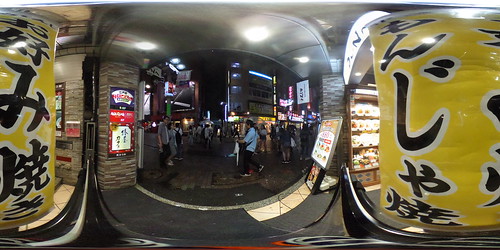
A trip to Tokyo seemed the perfect opportunity. A collision of ancient and modern, Blade Runner in a petri dish.
How did it go? Well it's certainly out of my comfort zone! Pretty much every maxim I follow is quite literally turned upside down.
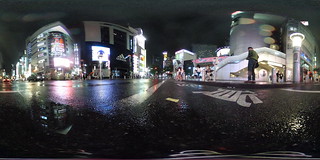
Is it street? Absolutely. As you immersive yourself in the image you are in the moment as well as outside it. A participant and an observer. Part of a bigger story.
That's life. That's street.
My reflections at the end of last year have led me to looking at my work in a bigger context. For a long time I resisted any kind of interpretation of my work. Hey this blog was the cause/effect of doing just that.
My idea is to develop a body of work around people in cities – no surprise there – but recognising Europe is in a particular period of change. European cities were in the vanguard of the first waves of urbanisation. They are now the destination for another mass movement of people. So far so good. It's how they've historically grown and prospered. This time things are different. Attitudes and assumptions are being challenged. The essence of what it is to be a citizen is being fought for, intellectually and physically.

I’ll say up front my pictures aren’t documentary in terms of taking a journalistic approach. These are more personal which I appreciate can be a euphemism for self-referential shoe-gazing. As if.
My angle on this story is an appreciation in some way of what it is to be a child of Irish immigrants. Granted with the privilege of blending in but still with an appreciation of what it is to be an outsider.
There’s no set plan or timetable yet. I’ll share work in progress here. I’m also interested in other forms of presenting it. I’m not rejecting books by default but hey it’s 2017 and other ways and means are possible.
Wish me luck.
Wonderful to see Markéta Luskacová in conversation at the National Portrait Gallery this week with my friend Paul. She's an inspirational figure for me and her work in 70s London really does feel like another country where they do things differently. It was really apt to see her with Paul who played a big part in the development of my own ways of looking at the world.
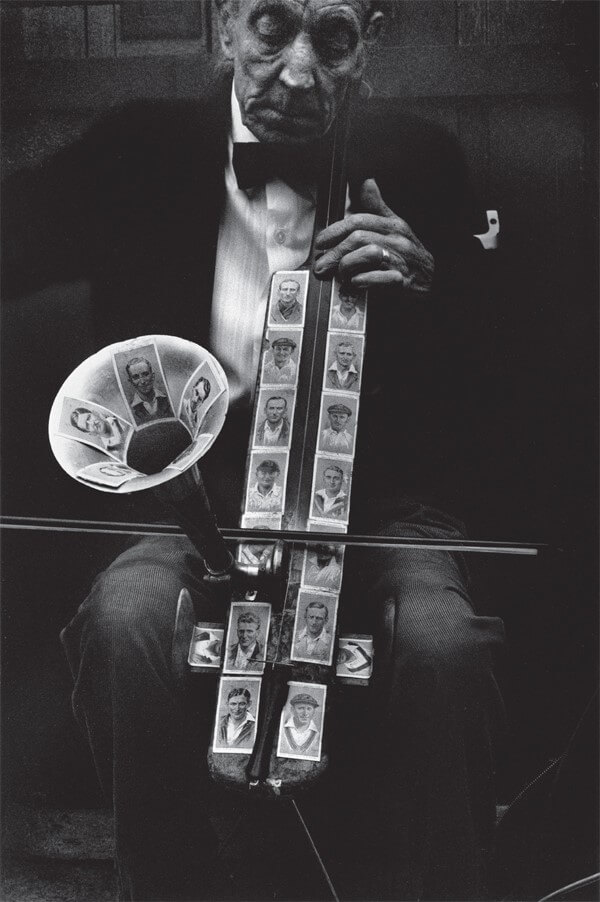
London Street Musicians, Markéta Luskacová
I'm always fascinated by how people go about pursuing this passion in relation to the real world of making a living and looking after a family. Markéta's description of taking her son in his push-chair on her trips around Brick Lane was a wonderful illustration of the compromises made.
Her story is also a timely reminder of the role of immigrants in London's growth as a world city. Undoubtedly Markéta felt a cultural affinity with the musicians she photographed but their outsider status reflected her own experience.
Buy her books!
Not my typical topic but I must mention the artist Mat Collishaw’s current installation using virtual reality (VR) with the subject of the world’s first exhibition of photography held by William Henry Fox Talbot in Birmingham in 1839.
At first sight you see a white washed room empty apart from a set of tables and cabinets also painted white. Donning a VR headset transforms the space into a detailed recreation of the room at the time of the exhibition.
This is itself a compelling idea but I admire the attention to other facets of the experience both sensory and historical that enrich it. Mice scurry across the floor, smells and heat from a fire prickle your face. Moths get too close to the candle flames. You can hold a glass photographic plate. From outside the window the sounds of Chartists demonstrating against new technology taking away people’s jobs echo through space and time. Other 21st century visitors appear in your field of view as ghostly shapes.
Thresholds by Mat Collishaw from Mat Collishaw Studio on Vimeo.
My fascination is in the way Collishaw uses
- new technology to tell a story in way that enriches it without it becoming a product demonstration
- VR in particular as today’s magical way of representing reality
- the original uncertainty around what photography was and who was it for as a counterpoint to the current ubiquity of images
- photography as a harbinger of social disruption (last but not least)
As a practitioner of photography very much rooted in the 20the century it prompts me to revisit my thoughts on modernising street photography. Can these technologies add another dimension to my ways of working? Not only in creation but in production, display and distribution?
Interesting times!