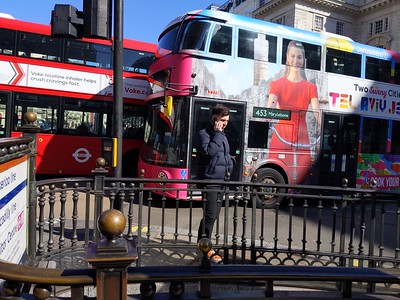
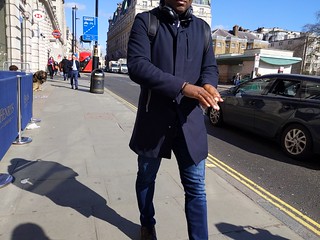
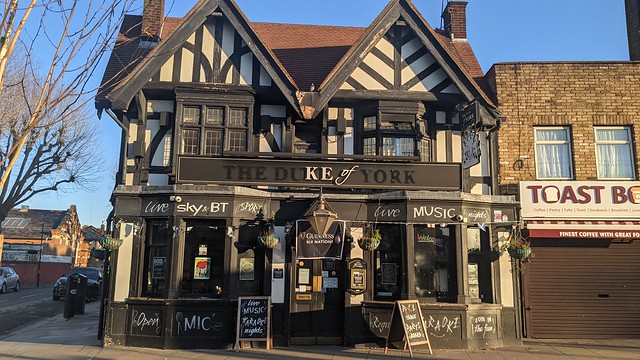
Pleased to announce the arrival of a test copy of my first foray into zine territory New Europe 2015-19.
I've appended the dates since I put this together last year as it really does feel like another world. Perhaps pre-2020 will become a phrase of the future freighted with meaning. In the meantime it already has an nostalgia skin to the wonderful Café Royal books. I see so many instances of our former paradigm of privilege that it puts the themes I was exploring into profound perspective.
Here's my original thinking, way back last year...
European cities have long been shaped and identified by immigrant populations. No news there. It's how they've historically grown and prospered. This time things are different. Attitudes and assumptions are being challenged. The essence of what it is to be a citizen is being fought for, intellectually and physically.
When I think of London I don't think of monuments to the past. I think of people. People like my parents who came here for a better life. But it's not easy. London is a dream as much as a place. The streets don't always glitter with gold. But still people come from all around the world. We make lives, love, work, bring up families. Along the way we keep a connection to the home country. But something else happens. Out on the street we share the everyday. Struggles. Triumphs. Despair. We share space and time.
We belong.
Well.
The ease of travelling to European cities for the fortunate is now elevated to an aspiration for the few.
National consciousness is heightened. Borders are porous to this particular migrant. Tensions rise between city and village.
The advent of social distancing, a contender for phrase of the year, makes some of these images appear reckless. Some may say good riddance, granted.
Will we ever return to that way of walking, way of life even, with the same confidence? I'm sure we will but right now, with talk of one-way pavements, it feels a little distant.
I'm fundamentally challenged not just by the current restrictions on personal movement but by the impact of them on my very impulse for taking photographs. The irony of the phrase street photography comes home to me. The streets are nothing without people. Without people's faces.
For succour I'm drawn to photo books. My guilty pleasures. I recently saw a picture by the photographer William Gedney posted on Twitter which lead me to a lovely collection of his work by Gilles Mora, Only The Lonely. Wilfully resisting or indeed neglecting to create any public profile for his work during his lifetime Gedney has only since his death achieved any recognition. His work has plenty of stylistic traits that interest me but I was drawn to his working practice, what Mora calls his "commitment to his art...born solely of a internal necessity"'
Myrtle Avenue, May 5, 1969, 4:45 pm, William Gedney
His work is part of but also separate from the American 20th century documentary tradition. The words immersive and complicity are used to describe his technique and it's fascinating to see how he transposes that to his street work. One of Gedney's significant project was the documentation of life on Myrtle Avenue as he looked from his windowin Brooklyn.One image that caught me eye is the only one in his archive titled with such specificity. It place not just himself but me as a viewer in that moment in time. I've always eschewed titles of any description yet this made me think again. It made me think of Chris Dorley-Brown's use of it in The Corners to root his images in an alternate reality. For me knowing the time the picture was taken doesn't define it but adds another layer of story telling, of possibility, of ambiguity.
I'm intrigued. Why May 5? 4:45 in the afternoon? What happened on that day? At that time? I thought of the turmoil of that decade in America, powerfully portrayed by Paul Fusco'sRobert F. Kennedy’s Funeral Train.I imagined Gedney listening to the radio and feeling impelled to record and reflect the moment. It'd be fascinating to see if anything is revealed in his writings. I don't think it's what I found.
I recognise this relationship of the ordinary to the extraordinary was my motivation for my New Europe project. It's also poignant that any photographs taken in 2020 will need no such checking.
It seems timely to revisit a book I put together a few years ago called Distance Between Us. The images I chose illustrated my love of city life: the democracy of public space (the civilisation of civic space?). Moments where we share intimate proximity with strangers, creating serendipitous relationships on the wing.
At least that's what we used to.
The current coronavirus crisis has meant fundamental changes to our daily interactions with each other. A new phrase social distancing has entered the language. It's a fascinating and terrifying concept. It arguably strikes to the heart of our lives as citizens. We take freedoms of association and movement so easily far granted in what I'll call liberal democracies. Well this is a global crisis with lives of millions of people at risk (not forgetting the other one). Rome,Madrid and New York are already under states of emergency. Paris, Amsterdam, Dublin and Berlin limiting public gatherings. The very fabric of city life has disappeared overnight.
London waits.
Earlier this month I was at a strangely empty Photographers Gallery. Ten days later I wonder when I'll next be at an exhibition, performance or indeed any public gathering. I was there to see four nominees for the Deutsche Börse prize and admired the multidisciplinary approach of Mohamed Bourouissa including a piece of augmented reality.
Reserve army of the unemployed, Mohamed Bourouissa
The comparison with these shrouded figures to the images we're seeing daily of health workers clad in hazmat suits was powerful. Seeing them materialise in the gallery, silently observing our entitled behaviour, revealed the surrealism of our situation. It's a rude awakening.
I'm really glad I made it to the Dora Maar show at Tate Modern before it closes as, once again, my eyes were opened to another photographer who excelled at candid photography in the midst of social change.
Maar's story goes well beyond her trip to London in the 1930s so this work is very much a moment on her path to her better known life as a surrealist, encompassing photomontage, painting and poetry, but for me it was a fascinating example of little-known street photography - being outside the canon, obvs - that even in the few images in this show really gave me some small insight into her thoughts and motivations
The portraits in London are very much rooted in their environment. We see individual hardship in the shadow of the bricks and mortar of questionable financial probity. I hadn't seen an image of a pearly king in years and Maar's photographs really made me think of the historical representation and reality of English working class culture.
No dole - Work wanted - Lost all in business, Dora Maar, 1934
Pearly King collecting money for the Empire Day, Dora Maar, 1935
There's a mood about them, and her other photographs from the streets of France and Spain in the same period, that for me has more of an edge than the French humanist style of that time, feeling more affinity with the emerging American outsider. They reflect the social context of the times through the idiosyncratic, compassionate eyes of the photographer. Timeless in lots of ways.
The Trial of Tatsuo Suzuki sounds like a 19th century novel. The artist guilty of following an unacceptable moral code to create his work. Sounds familiar?
I first saw Suzuki's work about a year ago as part of Samuel Lintaro Hopf's On The Streetseries.
I find films of street photographers' working fascinating. Nick Turpin's In-Sight is a fine example. This one however had more of a punk aesthetic to it. Suzuki's modus operandi is closer to a 3 minute 3 chord than an improvisational jazz piece.
I must confess to empathising with his technique. No surprise there. However the controversy over his use in a Fuji ad campaign has been interesting for me as it's brought this particular style into public debate. He's seen as aggressive and rude.Others say it's very much on the tradition of street photography and it's seeing the making of the pictures that reveals actually what it takes to produce that work.
I take this to a point but the advent of digital must play a part too and can easily be characterised as spray and pray which can upset the purist. At one point in the On The Street film there's a discussion of SD cards and that 16GB is not enough as you can only take 500 pictures. That's 6 months' of images in my world.
I agree it's a masculine way of taking photographs. There's a sense of entitlement that it's OK to behave in this way. There are plenty of examples of arguably more just as creative work by women that aren't promoted at all.
Which, once again, leads me to think street is actually more about the photographer then the photographed. This is an argument that of course could be applied across all forms of photography but I think street comes closest because what can one ever really know about the people in the pictures?
When Cartier-Bresson goes to China, he shows that there are people in China, and that they are Chinese. Susan Sontag
So back to Suzuki who undercuts the theory with a very practical reason for his from the hip style. Looking through a a viewfinder doesn't work for him. He's left eye dominant. Furthermore he himself twists a cultural stereotype in his favour, "I'm just a stupid tourist". Hmm. Good line that.
I've been pursuing a style of photography now called street for a number of years. A south Londoner by birth I am pre-occupied with the West End and spend too much time there taking black and white pictures on film.
I nurture a hope that one day London will be recognised like Paris, New York and Tokyo as a great city of street photography but secretly like the fact that it is still the underdog.
For someone who enjoys the solitary practice of his work I am surprisingly talkative about it - although not at the same time.
Here's a collection of idle musings and distracting links. If anything catches your eye drop me a line at sean@waysofwalking.net