17 Jan 2021

be more us

Lockdown rolls on and it was inevitable my response to my photography group's challenge to pick 9 images to represent 2020 would feature them. However instead of replaying a selection from my book I thought it was an opportunity to reflect on how much the familiar has changed. 

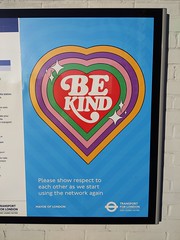
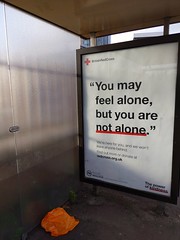
I've found the transformation of advertising an interesting reflection of that. No new films, plays and exhibitions to promote. Seasonal holidays, retail sales and sports events are now all out of sync. We're left with those spaces - especially by bus stops - giving public information from physical health to mental well-being. For me it adds to that wartime atmosphere, or at least my imagining of it. I'm fortunate the closest I've been to anything like this are my family holidays in the 70s.

IMG_20201122_085142 IMG_20201011_085440 2020-06-30_08-05-52

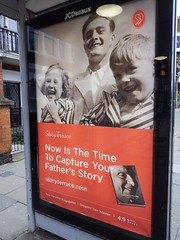
COVID references are also seeping into advertising not as a warning but a selling point, almost as a new subculture is absorbed by the mainstream to appear more 'edgy' or 'relevant' but in our upside down world the relevancy is about hygiene, safety and security. Fear is further played upon with a new service to document your grandparents' memories, now ironically the most valued members of society - no longer the forgotten or neglected, for a while at least.
IMG_20210101_085805 IMG_20201224_084310 IMG_20201231_090039
IMG_20201129_083450 IMG_20201129_083116 IMG_20201223_061910

My final image of looking forward to 2021 is a genuine reflection of a feeling of a lot of people but again it fits with the trend of brand advertising that isn't about the product but in some tangential, sometimes tenuous, way connects to a broader societal issue. 2020 provided plenty of opportunities to do that.

Roll on 2021.


28 Dec 2020

book of the year

I've been looking for new photography inspired by the events of this year even before I'd thought of collecting my own work into a book. Insiders by Liam Basford and Dominic Nozahic was published over the summer with a real energy and urgency to capture the moment but also acknowledge the impact on artists and creators. This was the theme of Limbo too with some high profile contributors and production values. In contrast Robert Law's Village Lockdown was a very personal response and none the less important. 

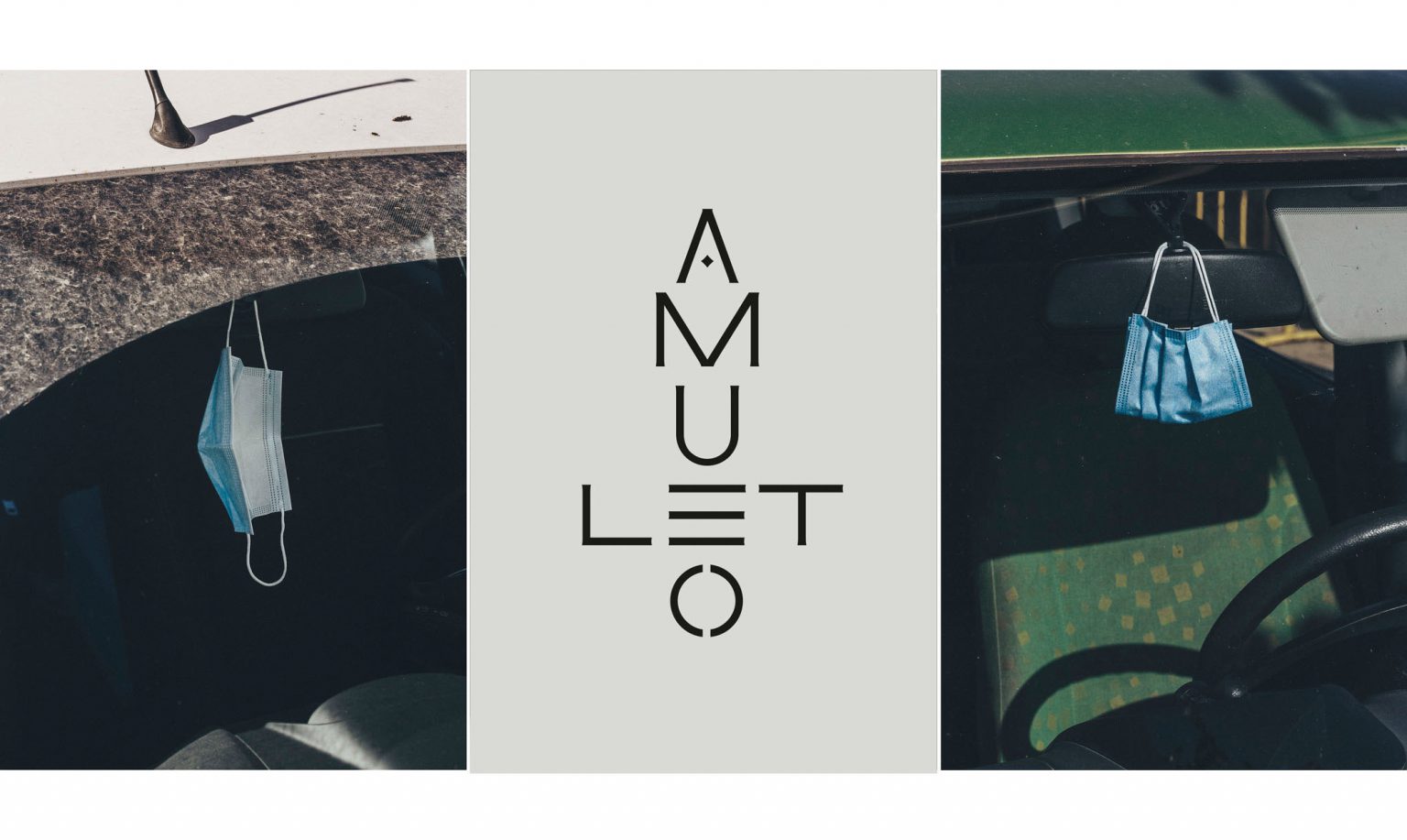
However in this final week of 2020 it's fitting to have found Amuleto by Francheska Melendez and Ben Roberts that synthesises COVID-19 and the killing of George Floyd in a powerful, understated way.

Amuleto by Francheska Melendez & Ben Roberts

The link between the two events is now, tragically, the phrase I can't breathe. Referencing current and historic texts as well as snippets of conversations the book weaves those words around a series of photographs of medical masks that we've now all become dependent on to ward off evil.

I admire the thought given to the iconography of the mask. Illuminated by Spanish sun its ubiquity and utility is transfigured. It's inspiring to take one element of so many visual references I've seen this year, to develop it in this way and then to combine it with words that root this in historic as well as contemporary context.

My book of the year. 


21 Dec 2020

here comes the sun

 Before dawn on the shortest day of the year

Before Dawn 21.12.20


After dusk on the shortest day of the year

After Dusk 21.12.20


Tomorrow, the days become longer


9 Nov 2020

london's dreaming

It's the start of the Second Lockdown.
 
For the only the second time since March I'm in the West End. 
 
I really feel I am literally going through the motions of being in the city. 

woman on Shaftesbury Avenue


Following one of my usual paths, along Piccadilly to Leicester Square and into Soho, emotionally and mentally it's not the same place. I could expect that. 
 
But the absence of its physical nature strikes me more.  
 
Wariness of our proximity to others feels like it's becoming second nature but it's not ...natural. 

cinema on Rupert Street 
 
The fabric of the city is beginning to rent, making manifest the mood of temporality. 
 
Don't get me wrong. Decay and renewal is part and parcel of the life of the city, a reflection of life lived. This is different. 
 
This is more about neglect and rejection. 

Shop window Piccadilly\


A brokenheartedness.


14 Oct 2020

sacred cows

The topic of ethics is never far away from documentary photography, and street work in particular, so my presentation on Post-Production to my local London Independent Photography group was a great entry point for me into that theme. I opened by apologising I'm the least qualified person in the group to talk to this topic, working in film as I do with no overt digital manipulation. Yet the very nature of photography is a manipulation of time and space so...anyway you're see where I'm going.

Since being introduced to The Corners by Chris Dorley-Brown discussed at a Street London event I'd been intrigued by reactions to it. I personally found it an exciting evolution of street photography, accounting for new technology - as street has always done - but retaining a fascination with the serendipities of people and place. I confess to have been taken in by the conceit until paying attention to the titles of the photographs and also listening to a great interview with him by Ben Smith.

This reminded me of the work of Peter Funch, someone else who had provoked questions about the legitimacy of composite images as street photography. I found the relationship between his series Babel Tales and the later work 42nd And Vanderbilt really interesting as the former threw doubt on the latter which, arguably, "fitted" the traditional definition of candid, non-manipulated photography more closely. At this point I was drawn to give some historical perspective and, to my opening premise, highlight examples of post production from other genres of photograph i.e. the surrealists including Dora Maar who herself bridged documentary and art in an inspirational way.

Falling headlong back in time we then found ourselves on the battlefields of the Crimea where the primacy of staged above found images give another dimension to the debate. Pre-Production perhaps? Roger Fenton's arrangement of cannonballs set a precedent that also bridged the realms of documentary and art into one of story-telling that runs until this day. Who is telling whose story has for me always stood in the shadows of photojournalism and this has now become such a topic of debate. It felt apt to close with an example of the work of Steve McCurry which for me is now a watershed from that Life magazine tradition which so inspired me growing up but which I now see with much more social and political context.

So, quite a meander through a history of photography but one I enjoyed researching at least! Here it is for the record.